Friday, November 1, 2013

Development Work and Culture in the Rural


Doing development work in the Philippines is a humbling experience since it gives us the opportunity to help our fellow countrymen. I'm a physical therapist by profession, but there was something in me that finds development work a daunting and fulfilling experience. I was able to serve and do volunteer work in the local and in abroad in which both left remarkable and special place in my heart. After my volunteer journey in Tajikistan, somewhere located in central Asia, I decided to involve myself again in the same field back home. Along with the national government and other private partnership, it also serves as an avenue for ourselves to immerse to the way of life of those who live in the far flung areas; places that are unfamiliar, yet with so much promising things to offer.


                                  Having fun and breathing the fresh mountain air with a colleague.

 
Occasional rain does not stop us to keep us moving


I was designated as a Community Facilitator in Tinglayan, Kalinga, a 4th class municipality situated in a mountainous area in the northern part of the Philippines. It takes almost a 9-hour rough ride on a top loader  type of jeepney from Baguio city which where I lived. When I started my job as a CF, the local government and the community were already in the last phase of the development project so most of the task was already in the documentation and monitoring stage. 


Putting up concrete-footpath along the sides of the rice terraces was one of the local project that I was monitoring together with local counterpart officials of the community. This pathways would be of great help in transferring and transporting the agricultural products efficiently from one place to another in the community and to the main road.  


Reaching the other areas of the community would need rigorous amount of walking...

...passing narrow steel bridges in Palang-Ah Falls.

...but with the help of the concrete footpath walking would be a breeze.


Aside from the usual community meeting with the local counterparts, I also got the chance to experience some of the practices they had. Almost 8 months of staying and living with them gave me a good grasp on their way of life.

Animal husbandry and agriculture are the main means of their livelihood. The surrounding mountain terrains were carve with rice terraces and irrigation system was built to keep the flow of water from the natural water resources such as falls and rivers. 

During harvest season, the locals gather in the paddy to collect the rice plants; a joyous event that almost similar to other festivities in the country. Adults and children alike help hand in hand in gathering the bountiful blessing from the heavens. Rituals are also held to thank the higher being and to ask blessing for the next harvest season.

                                                         Younger folks doing the play.


Although modernization abounds the agriculture field, the people of Tingalayan still prefer the traditional way.
They use wooden-made mortar and pestle to separate the grain from the husk. I have tried doing it myself and I must say it needs a lot of strength just to pound a few.


The tapuy or rice wine is also one of their products that are marketed in the nearby provinces which could be given as gift and souvenir. Its taste and alcohol content are almost similar to the commercial-made wines but less cheaper.


My stay here in Tingalayan does not only added to my experience as a development worker but what was  far more important was the once in a lifetime experience to live the life in the rural and to be able to cherish and to treasure every moment that would last forever.


Monday, October 21, 2013

Immaculate Conception Church

          A brisk walk from Poblacion, Tinglayan of Kalinga, you will see the Immaculate Conception Church of Barangay Luplupa. I had found the church accidentally when I got lost in this area. Taking the time to take pictures, a time to explore the place with the rest of my colleagues.


Saturday, October 12, 2013

Trip Down South of Manila

          If one is stressed out and only has a couple of spare time to escape from his monotonous urban life, a quick tour down south of Manila could possibly and, more often than not, makes a difference.  A two-hour ride from Manila heading Laguna one could reach the mystical town of Los Banos. Aside from the typical local delicacies and hot springs, the place also caters to the science and academic communities. Lies on the foothill of the legendary Mt. Makiling is the University of the Philippines Los Banos. One of the autonomous campus in the UP System, this academic institution serves as the center of academic excellence in the fields of agriculture, natural sciences and engineering.    

Sometime in September this year, I got the chance to see the place and experienced the breathtaking views of this campus. Just like at UP Diliman, anyone could enter the campus since it does not have gate, but make sure that you have a valid ID just in case a university police approaches you for identity verification purposes.


Facade 


The carabao and farmer monument found near the entrance of the campus symbolizes UPLB's dedication and excellence in the field of agriculture not here in the Philippines but also among its neighboring South East Asian countries.  

                                                                    The Oblation

It is a concrete statue by Filipino Artist Guillermo E. Tolentino which serves as the emblem of the entire UP System. It shows a man facing upward with arms outstretched, symbolizing selfless offering of oneself to his country.  I think the statue looks like me, or if ever, UP needs another model for their statue I would volunteer. Hehe.

                                                                        Freedom Park
This vast field is located near the dormitories and some school buildings inside the campus. Circling the field are trees which they called "The Fertility." It said that these trees serve as a dating place, and sometime, "motel freestyle" for lovers. The graduation ceremonies are being held here in April every year and other important university outdoor functions.

There are still a lot to see here, but due to time constraints and the bad weather, I was not able to roam around the campus. Definitely, if time permits, I would love to visit this place again and make sure to allot ample time to get the chance to see the entire campus and capture them with my handy and reliable camera. 


Tuesday, September 24, 2013

Wild Bitter Gourd in Kalinga

                  For children, seeing a bitter gourd served on plate will bring them to freaky reactions. The bitter after-taste lingers in their mind and the lovely mothers will think another play strategy to encourage them to eat the veggie. I had been in the same hot spot during my childhood years, the feeling that scares me of not surviving after engulfing the meal.


                Years passed by, things had changed in terms of health-conscious for some people that I’ve known. Eating veggies could maintain one's stamina, and the young vibrant looking will remain unnoticed along the aging process. I am sure, a lot of individuals will raise their eyebrows in a dramatic way, in denial of degeneration of the joints or flabby appearance of the musculature in the body.  The conclusion, no one is getting younger but looking young with the sweetest smile can do the trick.


              In Kalinga, can be found the wild bitter gourd called as “papait”. “Papait” appeared to be a small green pumpkin-like vegetable; it is not commonly seen in the urban areas of the Philippines. A quick grasp on this veggie will make you feel so excited to cook in a pan, thinly-sliced and sauteed with onions and tomatoes. The final outcome, the best wild gourd served on the table.


Monday, August 12, 2013

The White Water

               For those people who have the passion to travel and experience the river rafting, they tend to plunge in the Chico River of Kalinga. The excitement rushed into their spine as they puddled along the strong current of the river. It seems the adventure never ends for the traveler, taking into consideration the mode of transportation to reach the starting point of river rafting.

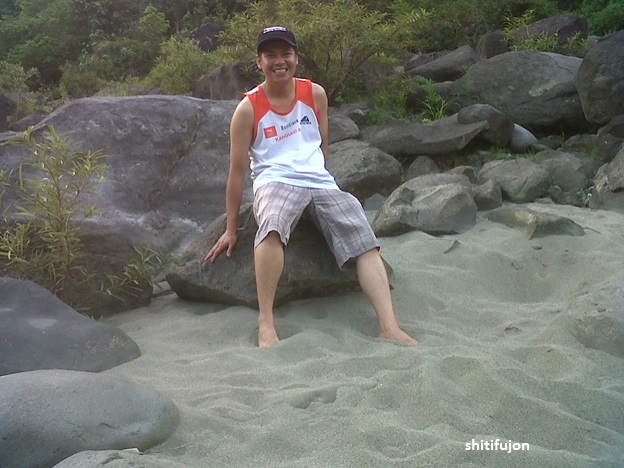
Rock Formation in Chico River

Leisure Time in Chico River

                As for me, I had once live in Tinglayan, Kalinga and there’s no rush of dipping my feet into the Chico River. In fact, it is just situated at the back of the house where I stayed for months. For a few quick steps on the foot path going to the river, it replenished the exhaustion in your body.

Picking Stones in the Riverside

Customized-Goggle

                A simple way to spend your leisure time with simplicity, a customized goggle can be used to catch marine animals. Taking the time to view the rock formation in the river side, can bring uplift your scarred feeling of loneliness. Being away from the family, especially living in the city is not an easy task. The chances are to explore the place and experience new things with your friends.


                Some local people used to go for swimming or even set a schedule to have picnic in this area. A new experience will never be the same as river rafting, but taking your ample time to swim in the Chico River is enough for a great adventure in life or even picking small stones form into different shapes and shades of color could make you smile.